
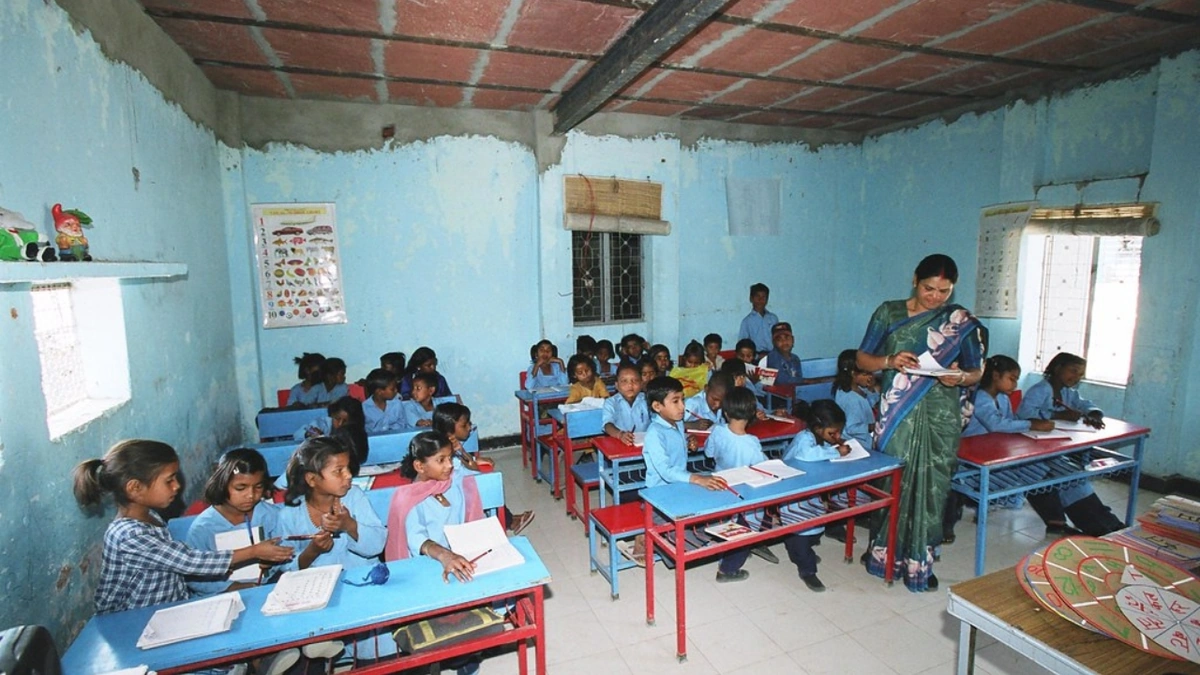
What if the ancient wisdom of the Vedas and the Bhagavad Gita could walk hand-in-hand with the cutting-edge world of computer science ? Sounds like a far-fetched dream, right? Well, in India, it’s rapidly becoming a reality, with support from institutions like Patanjali. But why is this happening, and what does it mean for the future of Indian education ? That’s the question we’re diving into today.
Why This Fusion Matters | Beyond Rote Learning

For decades, Indian education has been criticized for its emphasis on rote learning memorizing facts without truly understanding them. But here’s the thing: integrating ancient texts and philosophies isn’t just about adding more subjects to the curriculum. It’s about fostering a deeper, more holistic understanding of knowledge. As per the guidelines mentioned in the information bulletin, it will provide ethical framework to students. It’s about cultivating critical thinking, problem-solving skills, and a sense of purpose that goes beyond just landing a high-paying job. Think of it as adding soul to the machine, so to speak.
The Vedas, for example, are a treasure trove of knowledge about mathematics, astronomy, and medicine. The Gita offers profound insights into ethics, leadership, and decision-making. Combining these with computer science can create a generation of innovators who are not only technically skilled but also ethically grounded and socially responsible. Imagine coders who understand the implications of their algorithms on society, or entrepreneurs who build businesses with a strong sense of purpose.
What fascinates me is the potential to bridge the gap between tradition and modernity. It’s not about rejecting Western knowledge but about integrating it with our own rich heritage. It’s about creating a unique Indian education system that is both globally competitive and deeply rooted in our values.
Let’s be honest, some might scoff at the idea. They might see it as an attempt to impose religious values on education. But the real goal is to provide a more well-rounded education that nurtures not just the intellect but also the character and conscience of the students.Educationfostering social cohesion is a goal for the long run.
Patanjali’s Role | A Catalyst for Change
Patanjali, known for its contributions to yoga and Ayurveda, might seem like an unlikely player in the world of computer science . But here’s the thing: the organization has been actively involved in promoting holistic education for years. They see the integration of ancient wisdom and modern technology as a natural extension of their mission. They have been actively promoting the use of technology in education.
Their support comes in various forms, from funding research and development to creating educational programs and resources. They are also working to train teachers to effectively integrate these concepts into their classrooms. It’s not just about adding a few Sanskrit verses to the computer science curriculum; it’s about fundamentally changing the way we approach education.
But here’s the catch: scaling this initiative across the vast and diverse Indian education system is a huge challenge. It requires a collaborative effort from governments, educational institutions, and private organizations. It also requires a shift in mindset, from seeing education as a means to an end (a job) to seeing it as a journey of self-discovery and personal growth.
Practical Examples | Where Ancient Meets Modern
So, how does this integration actually work in practice? Here are a few examples:
- Using Vedic mathematics to simplify complex calculations in computer science.
- Applying the principles of the Gita to ethical decision-making in artificial intelligence.
- Developing software that promotes mindfulness and well-being based on yogic principles.
- Creating educational games that teach children about Indian history and culture.
These are just a few examples, but they illustrate the potential of this fusion. It’s about creating a new paradigm of education that is both relevant to the modern world and deeply rooted in our cultural heritage. According to the latest circular on the official NTA website , the Indian education system is evolving at a rapid pace.
A common mistake I see people make is dismissing these ideas as impractical or unrealistic. But the truth is, many of these initiatives are already underway. They are being piloted in schools and universities across the country, and the results are promising. Students are more engaged, more motivated, and more likely to pursue careers that align with their values.
Addressing the Challenges | A Realistic Perspective
Of course, there are challenges to overcome. Integrating ancient wisdom and modern technology requires a careful and nuanced approach. It’s not about blindly applying ancient concepts to modern problems; it’s about adapting them and reinterpreting them in a way that is relevant to today’s world. Finding qualified teachers is also one of the biggest challenges in the Indian education system.
There’s also the risk of cultural appropriation or misinterpretation. It’s important to ensure that these concepts are taught in a way that is respectful and accurate. This requires a deep understanding of both ancient texts and modern technology. Also, another common issue is the CSIR NET exam date clash with other competitive examinations.
And let’s not forget the digital divide. Not all students have access to computers and the internet. It’s important to ensure that these initiatives are accessible to all students, regardless of their socioeconomic background. The availability of the CSIR NET admit card download link should be communicated properly.
But these challenges are not insurmountable. With careful planning, collaboration, and a commitment to inclusivity, we can create an Indian education system that is truly transformative. Online education will be helpful to address this issue.
The Future of Indian Education | A Vision of Harmony
So, what does the future hold? I believe that the integration of the Vedas, the Gita, computer science , and other disciplines represents a bold new direction for Indian education . It’s a vision of harmony, where ancient wisdom and modern technology work together to create a more just, equitable, and sustainable world. But if I forgot my application number, then how to check CSIR NET application number ?
It’s not just about preparing students for the jobs of tomorrow; it’s about preparing them to be leaders, innovators, and change-makers. It’s about empowering them to create a better future for themselves, their communities, and the world. Students can use the methods to Indian education scholarship.
And that, my friends, is a vision worth pursuing.
FAQ
Why integrate ancient texts with modern subjects?
To foster critical thinking, ethical grounding, and a deeper understanding of knowledge.
How is Patanjali supporting this integration?
By funding research, creating educational programs, and training teachers.
What are some practical examples of this integration?
Using Vedic mathematics in computer science , applying Gita’s principles to AI ethics, etc.
What are the challenges?
Scaling the initiative, ensuring accuracy, and addressing the digital divide.
What if I forgot my application number?
Check the official website for options to recover your application number.
Where can I get more information about this initiative?
Visit the websites of Patanjali and relevant educational institutions.

Leave feedback about this