
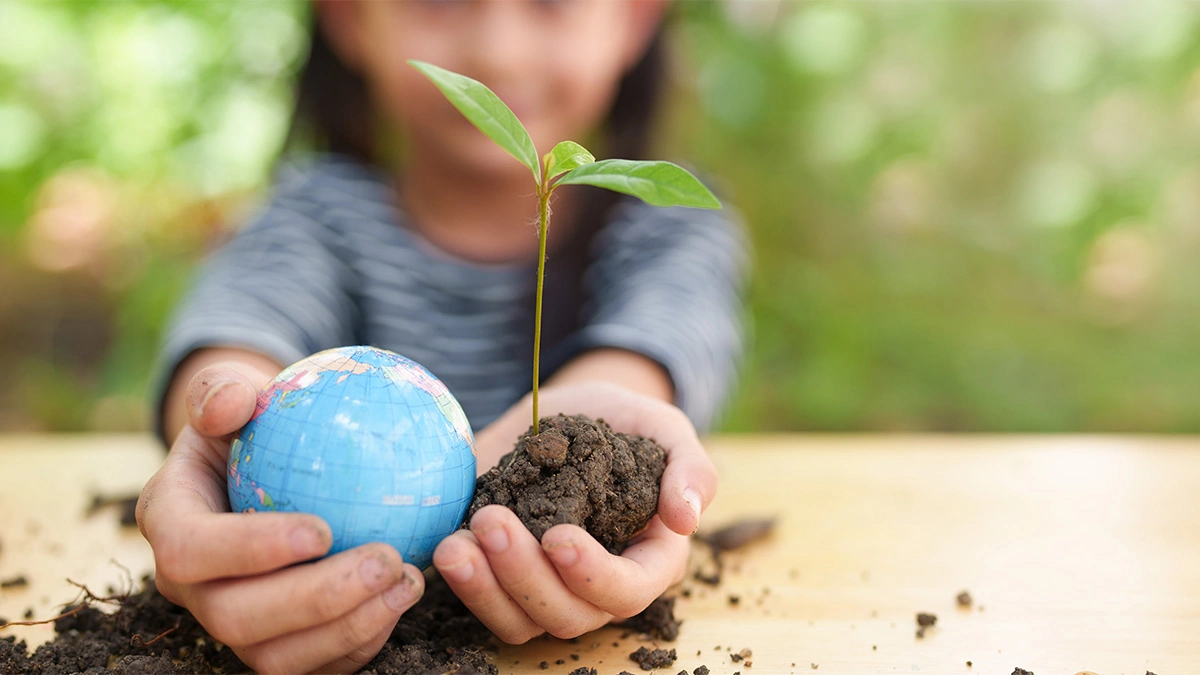
Let’s be honest, when we think about climate change education , our minds often jump to polar bears and melting ice caps. Important, sure, but a world away from the everyday realities of, say, a 14-year-old girl in rural Rajasthan. But here’s the thing: the climate crisis isn’t just about the abstract future; it’s unfolding right now, and its impact on Indian classrooms – especially on girls’ education – is profound.
The Invisible Barrier | Heat and School Attendance

Think about sitting in a stuffy classroom, the fan whirring uselessly, as the temperature soars past 40 degrees Celsius. Now imagine trying to concentrate on algebra or history. It’s tough, right? Now imagine that’s every day for months on end. This isn’t some hypothetical scenario; it’s the reality for countless students across India. Extreme heat is a silent, often overlooked, barrier to education. And it disproportionately affects girls.
Why girls? Well, for a multitude of reasons. In many communities, girls are tasked with household chores, fetching water (increasingly a challenge during droughts), and caring for younger siblings. When the heat becomes unbearable, and water sources dry up, these responsibilities intensify, pulling girls away from their studies. According to a report by UNICEF India , climate-related disasters exacerbate existing inequalities, including those related to gender and education.
And it’s not just about the physical discomfort. Prolonged exposure to extreme heat can lead to heatstroke, dehydration, and other health issues, further impacting attendance and academic performance. I’ve seen firsthand how schools in vulnerable regions struggle to maintain even basic hygiene due to water scarcity, creating an environment that’s simply not conducive to learning. The issue of school absenteeism due to climate change needs urgent attention. The link to education investment northeast shows how important education is for everyone.
Drought’s Ripple Effect | From Fields to Classrooms
Droughts, increasingly frequent and intense due to climate change, create a cascade of problems that extend far beyond parched fields. When crops fail and livelihoods are threatened, families are forced to make difficult choices. Education, especially for girls, is often the first casualty.
In many rural communities, girls’ education is seen as less of a priority than boys’. When resources are scarce, families may prioritize sending their sons to school, believing that they are more likely to secure employment and support the family financially. Girls, on the other hand, may be kept at home to help with household chores or contribute to the family income through informal labor. This disparity is worsened during droughts when financial pressures are at their peak.
But the impact of drought extends beyond immediate financial concerns. Food insecurity , a direct consequence of drought, can lead to malnutrition and health problems, further hindering girls’ ability to attend school and concentrate on their studies. Climate change acts as a threat multiplier, exacerbating existing vulnerabilities and creating new challenges for girls’ education. And that is why we need effective climate change adaptation strategies .
Reimagining Education | Climate-Resilient Schools and Curriculum
So, what can be done? The solution isn’t simply to wring our hands and lament the situation. It requires a multifaceted approach that addresses both the immediate challenges and the underlying causes of climate change. And that begins with weaving climate change curriculum in schools. We need schools that are climate-resilient – designed to withstand extreme weather events, with access to reliable sources of water and energy.
But physical infrastructure is just one piece of the puzzle. We also need to reimagine the curriculum itself. school web app can help to make study materials easily accessible to all. Climate change education shouldn’t be confined to science classes; it should be integrated across all subjects, from history to literature to social studies. Students need to understand the science behind climate change, its impacts on their communities, and the actions they can take to mitigate and adapt to its effects. What fascinates me is how little we talk about indigenous knowledge systems in climate solutions – traditions that have sustained communities for centuries.
Moreover, education should empower girls to become agents of change. By providing them with the knowledge, skills, and confidence to address climate change, we can unlock their potential to create a more sustainable and equitable future. And it is important to encourage students to participate in environmental awareness programs .
Empowering Girls | The Key to a Sustainable Future
Ultimately, addressing the climate crisis in Indian classrooms requires a fundamental shift in perspective. We need to recognize that girls’ education isn’t just a social issue; it’s a climate issue. When girls are educated, they are more likely to delay marriage, have fewer children, and participate in the workforce. They are also more likely to adopt sustainable practices and advocate for climate action.
Investing in girls’ education is one of the most effective ways to combat climate change. It’s not just about providing them with access to knowledge; it’s about empowering them to become leaders, innovators, and problem-solvers. As Malala Yousafzai famously said, “One child, one teacher, one book, one pen can change the world.” And in the face of the climate crisis, we need all the changemakers we can get. Moreover, the importance of sustainable development goals and how they align with climate change education should also be emphasized.
So, the next time you hear about climate change impacts on education , remember the girls in those classrooms, battling the heat, the drought, and the odds stacked against them. Their future, and ours, depends on it. In the latest report from the Ministry of Education, there’s an increased focus on vocational training and skill development. While that is important, ensuring a future for these skills to be practiced requires a habitable planet, a fact we should always keep in mind.
FAQ on Climate Change Education
Why is climate change education important in India?
India is highly vulnerable to climate change impacts. Education empowers individuals to understand and address these challenges.
How does climate change affect girls’ education specifically?
Extreme weather events exacerbate existing inequalities, forcing girls to drop out of school due to increased household responsibilities and financial constraints.
What can schools do to become more climate-resilient?
Schools can implement measures like rainwater harvesting, solar power, and tree planting to reduce their environmental footprint and provide a more comfortable learning environment.
What if I want to learn more about climate change?
There are many reliable sources, like the IPCC reports and educational websites, that offer comprehensive information. IPCC reports are comprehensive and detailed and offer the most up-to-date scientific information.
How can I support climate change education in my community?
Volunteer at local schools, advocate for climate-friendly policies, and support organizations working to promote environmental awareness.
What are some simple ways to reduce my carbon footprint?
Conserve energy, reduce waste, eat less meat, and choose sustainable transportation options.

Leave feedback about this