
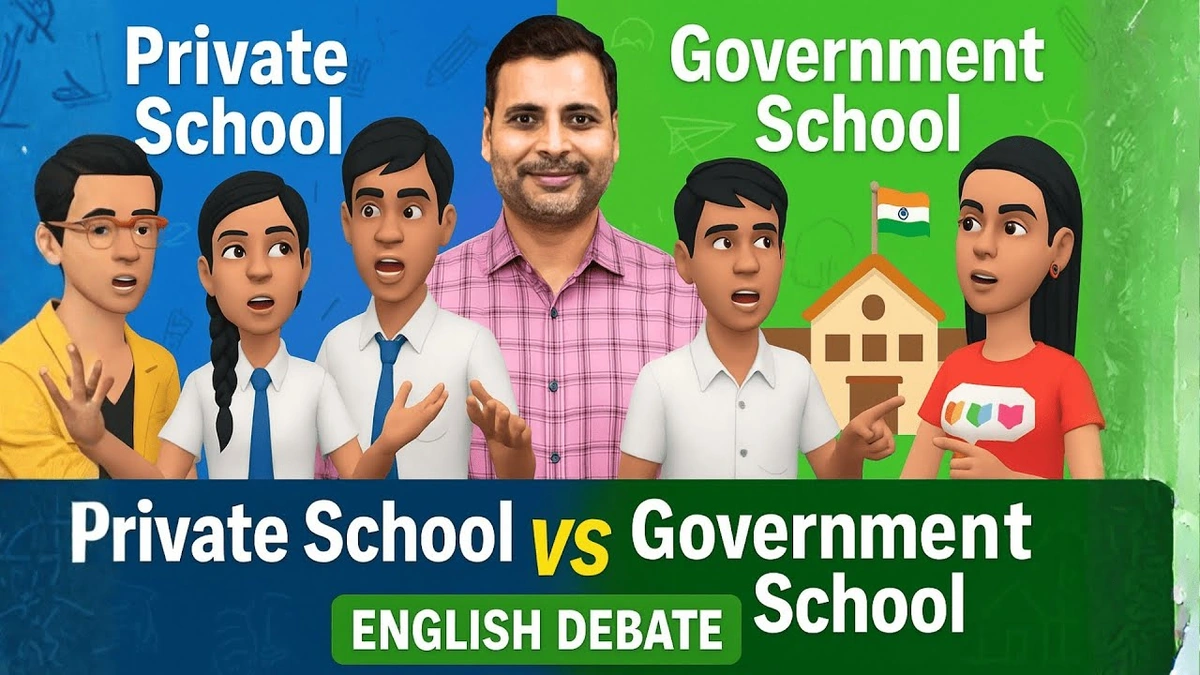
Choosing the right school for your child in India can feel like navigating a maze. Private vs Government schools – the debate is as old as time, or at least, as old as India’s education system itself! It’s not just about fees; it’s about the learning environment, teaching quality, infrastructure, and the overall development of your child. Let’s be honest, the decision weighs heavily on every parent.
Here’s the thing: there’s no one-size-fits-all answer. What works for one family might not work for another. What fascinates me is how much the landscape has changed even in the last decade, with both government and private institutions upping their game. Let’s dive into why understanding the core differences matters more now than ever.
The Core Curriculum and Teaching Methodologies
The first major divergence lies in the curriculum. Government schools predominantly follow the state board syllabus or the CBSE (Central Board of Secondary Education). Private schools often offer a wider range, including ICSE (Indian Certificate of Secondary Education) or even international boards like Cambridge IGCSE or IB (International Baccalaureate) . This affects not just what your child learns but also how they learn. State board syllabi can be more theoretical, while ICSE and international boards often emphasize application-based learning and critical thinking.
But – and this is a big but – the quality of teaching varies wildly in both sectors. You’ll find dedicated, passionate teachers in government schools who are making a huge difference with limited resources. And you’ll find some private schools where fancy infrastructure masks mediocre teaching. Don’t just assume that a higher fee automatically equals better education.
According to the National Education Policy (NEP) 2020, there’s a push for more holistic and experiential learning across all schools, regardless of whether they’re government-run or private. This aims to bridge the gap in teaching methodologies and focus on skill development. But, implementation is key, and it’s something we’ll need to watch closely.
Infrastructure and Resources | A Tangible Divide
Let’s be blunt: infrastructure is often where private schools have a clear advantage. Air-conditioned classrooms, well-equipped labs, libraries stocked with the latest books, sports facilities… these are the selling points that draw many parents in. Government schools, especially in rural areas, often struggle with basic amenities. Classrooms can be overcrowded, resources limited, and infrastructure outdated. Check here some schools, however, are experiencing an upgrade.
That said, don’t underestimate the power of resourceful teachers and motivated students. I’ve seen government schools with bare-bones facilities produce students who outperform their private school counterparts. It’s about the spirit of learning, not just the fancy gadgets.
And, the government is actively investing in improving infrastructure in government schools. Initiatives like the Sarva Shiksha Abhiyan and Rashtriya Madhyamik Shiksha Abhiyan are aimed at providing better facilities and resources to students in government schools. The impact is gradual but visible.
Fees and Financial Accessibility | The Deciding Factor
Let’s address the elephant in the room: fees. Private schools can range from affordable to exorbitant, depending on the brand and location. Government schools, on the other hand, offer education at a fraction of the cost, and sometimes even for free. This makes them accessible to a wider section of society, especially families from lower socio-economic backgrounds.
But consider the hidden costs. Private schools often have additional charges for uniforms, books, activities, and transportation. These can add up significantly. Government schools may require parents to contribute in other ways, such as volunteering time or providing support for school events.
There are also scholarships and financial aid programs available for students in both sectors. The key is to research and explore all available options.
The Social Environment and Peer Group
The social environment in a school plays a crucial role in a child’s development. Private schools often have a more homogeneous student population, with students primarily from similar socio-economic backgrounds. Government schools, on the other hand, tend to be more diverse, reflecting a wider range of social and economic backgrounds.
This diversity can be a huge advantage. It exposes children to different perspectives, fosters empathy, and prepares them for the real world. However, it can also present challenges, such as language barriers or cultural differences. A common mistake I see people make is underestimating the importance of social interaction in a child’s formative years.
Ultimately, the ideal social environment depends on your child’s personality and needs. Some children thrive in a more structured and homogeneous environment, while others flourish in a more diverse and inclusive setting. Learn more.
Long-Term Outcomes and Career Prospects
Do students from private schools have better career prospects than those from government schools? The answer is… it depends. There’s no definitive evidence to suggest that one type of school guarantees success over the other. What truly matters is the quality of education, the student’s hard work, and their overall personality development. Having access to better career counseling is a big differentiator though.
I initially thought this was straightforward, but then I realized the alumni networks of some private schools can provide a significant advantage in terms of internships and job opportunities. However, government schools are increasingly focusing on vocational training and skill development to improve the employability of their students. The one thing you absolutely must double-check is the school’s accreditation.
As per the guidelines mentioned in the information bulletin from various educational boards, the emphasis is on creating well-rounded individuals who are equipped to succeed in a rapidly changing world. And, you need to think about extracurricular activities . Does the school offer what your child needs to grow?
FAQ Section
Frequently Asked Questions
What if I can’t afford private school fees?
Don’t worry! Many government schools offer excellent education at a very low cost. Explore scholarship options and focus on supplementing your child’s learning at home.
Are government school teachers less qualified?
Not necessarily. Government school teachers are required to have specific qualifications and undergo training. The quality varies, but there are many dedicated and experienced teachers in government schools.
Do private schools guarantee better results in exams?
No. While some private schools have a strong track record, results depend on many factors, including the student’s effort, teaching quality, and the overall learning environment.
What are the key factors to consider when choosing a school?
Consider your child’s needs, your budget, the school’s curriculum, infrastructure, teaching quality, and social environment. Visit schools, talk to teachers and parents, and make an informed decision.
How can I find the best government school in my area?
Research online, ask for recommendations from friends and neighbors, and visit the schools personally to assess their facilities and teaching quality.
Ultimately, the choice between government and private schools is a personal one. There’s no right or wrong answer. The best school is the one that best meets your child’s individual needs and helps them reach their full potential. What matters most is creating a supportive and nurturing environment where your child can thrive, regardless of the school they attend.


Leave feedback about this