
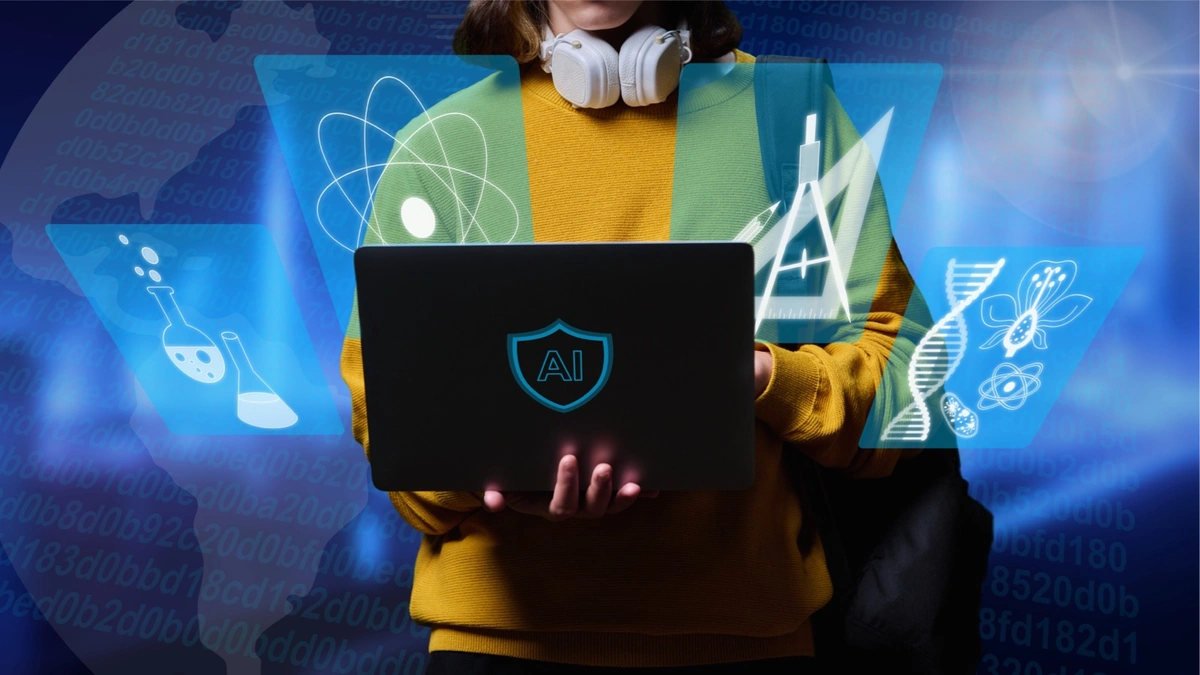
Alright, let’s talk AI. Not the sci-fi kind, but the kind that’s slowly (or not so slowly) changing everything around us. From the apps on our phones to the jobs we might have in the future, artificial intelligence is becoming a big deal. But here’s the thing: is everyone in India getting a fair shot at understanding and using this powerful technology? That’s where the AI education inequality comes in, and it’s a problem we need to unpack. What fascinates me is not just the technology itself, but who gets access to it – and who doesn’t. So, grab your chai, and let’s dive in.
The Digital Divide and AI Literacy

We all know about the digital divide. Some have super-fast internet, fancy laptops, and all the online courses they could dream of. Others? Not so much. This gap isn’t new, but it’s becoming a chasm when we talk about AI. Think about it: learning AI isn’t just about coding; it’s about understanding algorithms, data analysis, and ethical considerations. These are skills that are going to be super important, but if you don’t have access to the right resources, you’re already behind. And let’s be honest, the current education system in many parts of India isn’t exactly geared up to tackle this. I initially thought this was straightforward, but then I realized the problem runs deeper than just access to computers. It’s about the quality of education, the availability of qualified teachers, and the relevance of the curriculum. The uneven distribution of resources only exacerbates this problem.
Why This Matters – The “Why” Angle
Okay, so some people have better access to AI education. Big deal, right? Wrong. This isn’t just about fairness (though that’s important too). It’s about India’s future. If a large chunk of our population is left behind in the AI revolution, we’re not just creating an unequal society; we’re missing out on potential innovation. Think about all the brilliant minds in rural India, or in underprivileged communities, who could be using AI to solve problems we haven’t even thought of yet. But they can’t, because they haven’t had the chance to learn the basics. And that’s a tragedy. The implications are huge. We’re talking about economic growth, social mobility, and India’s ability to compete on the global stage. If we don’t address the AI education gap, we risk creating a two-tiered society where only a select few reap the benefits of this technology. According to the latest reports, investment in digital infrastructure is essential to bridge the digital divide, but that is not enough by itself. Training programs and educational initiatives are equally important. As per the guidelines mentioned in the NITI Aayog’s strategy for AI, equitable access to education and training should be prioritized.
Practical Steps | Bridging the Gap – The “How” Angle
So, what can we do about it? Well, here’s the thing: there’s no magic bullet. But there are definitely some practical steps we can take. First, we need to invest in teacher training. Teachers need to be equipped to teach AI concepts in a way that’s accessible and engaging for students. This means not just throwing textbooks at them but providing hands-on experience and real-world examples. A common mistake I see people make is thinking that AI education is only for computer science students. It’s not. AI is relevant to almost every field, from medicine to agriculture to art. We need to integrate AI concepts into the curriculum across the board. The one thing you absolutely must double-check is access to affordable and reliable internet. The government initiatives like Digital India are a great start, but we need to ensure that these initiatives reach the most marginalized communities. And this is where NGOs and private companies can play a crucial role. Many organizations are already working to provide AI education to underserved communities. We need to support these efforts and scale them up. For example, programs that use gamification and interactive tools have shown promising results in engaging students who might otherwise be intimidated by complex technical concepts. Let’s be honest – if learning AI feels like a chore, no one’s going to stick with it. Maths education plays an important role in AI education.
The Emotional Angle | Stories of Change
Let me tell you a story. I recently met a young woman from a small village in Bihar who had never touched a computer until she was 18. But she had a passion for agriculture and a burning desire to improve the lives of her community. Through a government-sponsored AI training program, she learned how to use data analysis to optimize crop yields and predict weather patterns. Today, she’s a local hero, helping farmers in her village increase their income and improve their livelihoods. Stories like these are what keep me going. They remind me that AI isn’t just about algorithms and code; it’s about empowering people to create a better future for themselves and their communities. That moment of realization – when someone grasps a complex concept and sees how it can be applied to solve a real-world problem – is priceless. We need to create more of these moments. We need to foster a culture of innovation and experimentation, where everyone feels empowered to explore the possibilities of AI. It’s about building confidence and inspiring hope. That’s the real power of education.
Addressing the Skeptics | AI and Job Displacement
Okay, let’s address the elephant in the room. Many people are worried about AI taking their jobs. And it’s a valid concern. But here’s the thing: AI is more likely to augment human capabilities than to completely replace them. Think of it as a tool that can help us work smarter, not harder. The key is to prepare ourselves for the changing job market by acquiring new skills. This means focusing on areas where humans still have a distinct advantage, such as critical thinking, creativity, and emotional intelligence. What fascinates me is the potential for AI to create new jobs that we can’t even imagine yet. But we need to be proactive in ensuring that everyone has the opportunity to acquire the skills needed to fill these new roles. A common mistake I see people make is thinking that learning AI is too difficult or too technical. It’s not. There are plenty of online resources and training programs available that cater to different skill levels and learning styles. The truth is that AI skills are valuable not just for specialized AI engineers, but also for all kinds of professionals. For instance, marketers can utilize AI-powered tools for data analytics and personalized customer experiences, while HR professionals can leverage AI to streamline recruitment and employee management.
Conclusion | A Call to Action
So, where do we go from here? The future of AI education in India depends on our collective efforts. It’s not just the government’s responsibility, or the schools’, or the NGOs’. It’s everyone’s responsibility. We need to advocate for policies that promote equitable access to education. We need to support initiatives that provide AI training to underserved communities. We need to encourage young people to explore the possibilities of AI. And most importantly, we need to believe in the power of education to transform lives. Let’s work together to create a future where everyone in India has the opportunity to participate in the AI revolution. A good education is key to a better future.
FAQ Section
What if I don’t have a computer at home?
Many community centers and libraries offer free access to computers and internet. Check with your local authorities or NGOs for available resources.
I’m not very good at math. Can I still learn AI?
Absolutely! While some AI concepts involve math, there are many aspects of AI that don’t require advanced mathematical skills. Focus on areas that align with your strengths and interests. The basic understanding of algorithms is important.
Are there any free online resources for learning AI?
Yes, there are many free online courses and tutorials available on platforms like Coursera, edX, and YouTube. Look for courses specifically designed for beginners.
What kind of job can I get with AI skills?
AI skills are in demand across a wide range of industries. Some popular job roles include data scientist, machine learning engineer, AI researcher, and AI consultant.
How can I convince my parents that AI education is important?
Explain to them the potential benefits of AI skills in terms of career opportunities and economic growth. Show them examples of how AI is being used to solve real-world problems.
Where can I find information on AI educational initiatives in my region?
Check with your local government agencies, educational institutions, and NGOs for information on available programs and resources. Look for organizations that specialize in digital literacy and skill development.


Leave feedback about this